Maskapai Penerbangan Terbesar Dunia: Analisis dan Strategi Bisnis
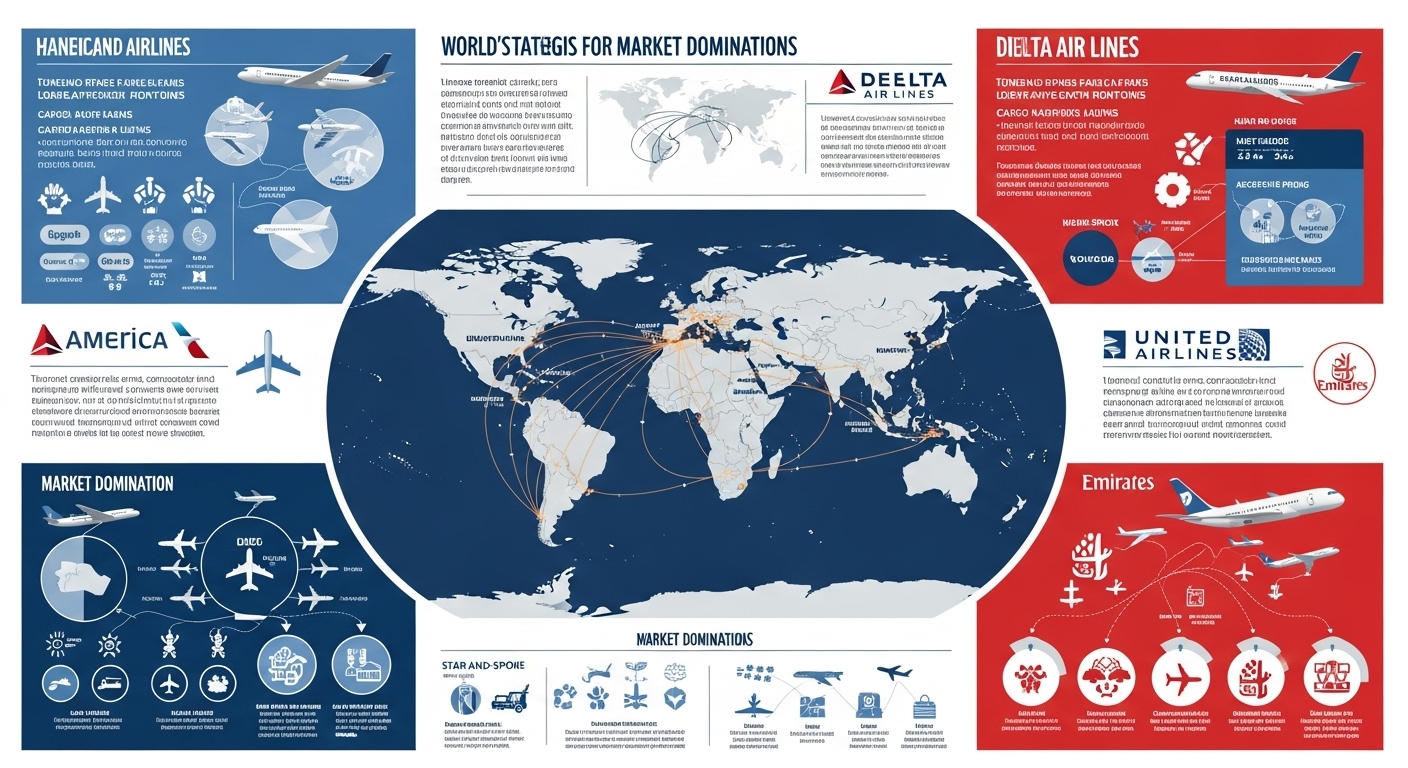
Industri penerbangan global adalah salah satu sektor paling kompetitif dan kompleks di dunia. Dengan revenue tahunan mencapai $800+ miliar (pre-pandemic), maskapai besar bersaing ketat untuk market share, profitability, dan customer loyalty.
Top Airlines by Fleet Size
American Airlines - Raja Amerika Utara
Overview:
- Base: Fort Worth, Texas
- Founded: 1930 (merged dengan US Airways 2013)
- Fleet: 900+ aircraft
- Destinations: 350+ (50+ countries)
Fleet Composition:
- Boeing 737 family: 300+
- Airbus A320 family: 450+
- Boeing 787 Dreamliner: 50+
- Wide-body untuk long-haul
Business Model:
- Hub-and-spoke dari 10 major hubs
- Dallas/Fort Worth (DFW) sebagai mega hub
- Focus pada domestic US market (70%)
- Oneworld alliance member
- Premium positioning untuk business travelers
Financial Performance (2019):
- Revenue: $45.8 miliar
- Passengers: 215 juta
- ASM (Available Seat Miles): 359 miliar
- Load factor: 84.5%
Competitive Advantages:
- Network terluas di US
- Frequent flyer program (AAdvantage)
- Premium lounges
- Strategic partnerships
Delta Air Lines - Innovation Leader
Overview:
- Base: Atlanta, Georgia
- Fleet: 850+ aircraft
- Hub utama: Atlanta (busiest airport globally)
- SkyTeam alliance
Differentiation Strategy:
- Customer experience focus
- Technology investment (app, biometrics)
- Premium products (Delta One suites)
- Operational excellence (on-time performance)
Fleet Modern:
- Heavy investment in A220, A321neo
- 787 dan A350 untuk international
- Phasing out MD-88/90 (completed)
- Average fleet age: 14 years
Inovasi:
- Free in-flight Wi-Fi (expanding)
- Parallel reality screens (baggage claim)
- RFID baggage tracking
- Facial recognition boarding
Financial Strength:
- Most profitable US carrier (pre-pandemic)
- Strong balance sheet
- Investment grade credit rating
- Consistent profitability
United Airlines - Global Reach
Overview:
- Base: Chicago, Illinois
- Fleet: 800+ aircraft
- Hubs: 7 major (Chicago, Newark, Houston, dll)
- Star Alliance
Global Strategy:
- Strongest Asia-Pacific network US carrier
- Guam hub untuk Asia connectivity
- Growing Latin America presence
- European expansion
Fleet Modernization:
- 270 Boeing 737 MAX ordered (largest US order)
- 50 Airbus A321XLR
- Supersonic jets (Boom Overture) deposit
- Target: youngest, most fuel-efficient fleet
MileagePlus:
- Most valuable loyalty program
- Spin-off valuation: $22 billion
- Partnership dengan Chase credit cards
- Award availability competitive
Asian Giants
China Southern Airlines - Largest by Fleet
Overview:
- Base: Guangzhou, China
- Fleet: 650+ aircraft (terbesar di Asia)
- Focus: Domestic China + regional Asia
- SkyTeam alliance
Growth Strategy:
- Domestic market explosion (rising middle class)
- Belt and Road Initiative routes
- Guangzhou hub untuk Australia/Africa traffic
- Government support
Fleet:
- Boeing 737 family: 400+
- Airbus A320 family: 200+
- Wide-body: 787, A330, 777
Market Dynamics:
- China fastest growing aviation market
- 3 major carriers: Southern, Eastern, Air China
- Intense domestic competition
- International expansion ongoing
Emirates - Luxury Powerhouse
Overview:
- Base: Dubai, UAE
- Fleet: 260+ aircraft
- All wide-body fleet (unique)
- Hub: Dubai International (DXB)
Business Model:
- Point-to-point via Dubai hub
- Connecting 6 continents
- Premium positioning
- No domestic market
Fleet Strategy:
- 115+ Airbus A380 (largest operator)
- 140+ Boeing 777 (largest operator)
- A350 dan 787 orders
- Ultra long-haul focus
Product Excellence:
- Onboard showers (A380 First)
- Chauffeur drive service
- ICE entertainment system (best in class)
- Premium economy competitive
Financial Model:
- Government-backed
- Tax-free environment
- Fuel hedging strategy
- Ancillary revenue strong
Singapore Airlines - Service Excellence
Overview:
- Base: Singapore
- Fleet: 200+ aircraft
- Consistently top-ranked
- Star Alliance
Reputation:
- World’s best airline (frequent winner)
- Singapore Girls (iconic branding)
- Service culture legendary
- Innovation leader
Product Innovation:
- First airline dengan A380
- Suites class (private rooms)
- Business class best in industry
- Premium economy pioneer
Subsidiaries:
- Scoot (LCC)
- SilkAir (regional - merged 2020)
- SIA Cargo
- Multiple training ventures
Strategy:
- Quality over quantity
- Premium segment focus
- Operational efficiency
- Young fleet (6.5 years average)
European Leaders
Lufthansa Group - Powerhouse
Overview:
- Base: Frankfurt & Munich, Germany
- Group fleet: 700+ aircraft
- Multiple brands strategy
- Star Alliance founding member
Portfolio Brands:
- Lufthansa (flagship)
- Swiss International
- Austrian Airlines
- Brussels Airlines
- Eurowings (LCC)
Business Model:
- Multi-hub strategy
- Premium positioning (Lufthansa brand)
- LCC competition (Eurowings)
- Cargo significant (Lufthansa Cargo)
Strengths:
- Strong European network
- North Atlantic leadership
- MRO capabilities (Lufthansa Technik)
- Catering division (LSG Sky Chefs)
Ryanair - LCC King
Overview:
- Base: Dublin, Ireland
- Fleet: 500+ Boeing 737
- Largest European airline by passengers
- Ultra-low-cost model
Business Model:
- Point-to-point
- Secondary airports
- Unbundled pricing
- High aircraft utilization (12+ hours/day)
Cost Leadership:
- Lowest unit cost in Europe
- Single aircraft type (737-800, MAX)
- No frills service
- Ancillary revenue 30%+
Performance:
- Load factors 95%+
- Passengers: 150+ million (pre-pandemic)
- Profitability leader
- Expansion aggressive
Middle East Carriers
Qatar Airways - Rising Star
Overview:
- Base: Doha, Qatar
- Fleet: 200+ aircraft
- Oneworld alliance
- Rapid growth
Product:
- Qsuites business class (award-winning)
- Young fleet (5 years average)
- A350 largest operator
- Premium focus
Strategy:
- Hamad International Airport hub
- 6th freedom traffic
- Sports sponsorships (FIFA, FC Barcelona)
- European expansion
Etihad Airways - Struggling Giant
Overview:
- Base: Abu Dhabi, UAE
- Fleet: 90+ aircraft (downsized)
- Strategic retreat ongoing
Challenges:
- Equity partnerships failed (Alitalia, Air Berlin)
- Competition from Emirates
- Abu Dhabi vs Dubai disadvantage
- Restructuring since 2017
Current Focus:
- Core network profitable routes
- A380 retirement
- Partnership strategy (codeshares)
- Premium positioning
Low-Cost Carrier Revolution
Southwest Airlines - LCC Pioneer
Overview:
- Base: Dallas, Texas
- Fleet: 750+ Boeing 737
- Largest domestic US carrier
- No assigned seating unique
Model:
- Point-to-point
- Single aircraft type
- High frequency
- Secondary airports (originally)
Success Factors:
- Employee culture (low turnover)
- Operational efficiency
- No change fees
- 2 free checked bags
Challenges:
- Network maturity
- Competition increase
- 737 MAX grounding impact
- Aging workforce
AirAsia - Asia’s LCC Leader
Overview:
- Base: Malaysia
- Group fleet: 250+ aircraft
- Multiple AOCs (Malaysia, Thailand, Indonesia, dll)
- Largest Asia LCC
Expansion:
- Regional dominance
- Long-haul (AirAsia X)
- Super app strategy (booking, food, payments)
- Digital transformation
Model:
- Ultra-low base fare
- Ancillary revenue focus
- A320 single type
- High utilization
Freight Leaders
FedEx Express - Cargo Giant
Overview:
- Fleet: 650+ aircraft (largest cargo)
- Base: Memphis, Tennessee
- Overnight delivery leader
Network:
- Hub-and-spoke for packages
- Time-definite delivery
- Global coverage
- Integrated logistics
UPS Airlines - Close Second
Overview:
- Fleet: 550+ aircraft
- Base: Louisville, Kentucky
- Worldport superhub
Differentiation:
- Brown brand recognition
- Ground network integration
- Healthcare logistics
- Supply chain solutions
Model Bisnis Comparison
Full Service Carriers (FSC)
Characteristics:
- Multiple classes (First, Business, Economy)
- Complimentary meals dan baggage
- Loyalty programs extensive
- Airport lounges
- Higher fares
Examples: Singapore Airlines, Emirates, Lufthansa
Profitability: Lower margins, premium revenue important
Low-Cost Carriers (LCC)
Characteristics:
- Single class
- Unbundled pricing
- No frills
- Point-to-point network
- Lower fares
Examples: Ryanair, Southwest, AirAsia
Profitability: Higher margins, volume driven
Ultra Low-Cost Carriers (ULCC)
Characteristics:
- Extreme unbundling (charged untuk everything)
- Highest density seating
- Ancillary revenue 50%+
- Secondary airports
Examples: Spirit, Frontier (US), Allegiant
Profitability: Highest margins when executed well
Key Success Factors
Operational Excellence
Critical metrics:
- On-time performance - Competitive advantage
- Aircraft utilization - 11+ hours/day ideal
- Load factor - 80%+ necessary untuk profitability
- Turnaround time - 25-45 minutes depending on aircraft
Network Strategy
Optimal design:
- Hub-and-spoke - Connectivity via transfer points
- Point-to-point - Direct flights, no transfers
- Hybrid - Combination dari both
Cost Management
Key cost drivers:
- Fuel - 25-35% dari total cost
- Labor - 20-30%
- Maintenance - 10-15%
- Airport fees - 8-12%
Revenue Optimization
Strategies:
- Dynamic pricing - Yield management algorithms
- Ancillary revenue - Baggage, seats, meals
- Premium products - Upselling ke higher classes
- Loyalty programs - Repeat customers
Trend dan Future
Consolidation
Industry trend:
- Mergers ongoing (antitrust allowing)
- Joint ventures (immunized partnerships)
- Equity partnerships
- Alliance deepening
Digitalization
Technology focus:
- Mobile-first experience
- Biometric boarding
- AI customer service
- Blockchain untuk ticketing
Sustainability
Environmental pressure:
- SAF (Sustainable Aviation Fuel) adoption
- Carbon offset programs
- Fleet renewal acceleration
- Operational efficiency
Post-Pandemic Recovery
New normal:
- Domestic recovery faster
- Business travel permanent reduction
- Leisure travel boom
- Cargo strength continues
- Capacity discipline
Maskapai penerbangan terbesar dunia memiliki strategi berbeda untuk sukses - dari Emirates dengan luxury positioning, hingga Ryanair dengan ultra-low-cost model. Tidak ada “one size fits all” dalam industri ini.
Keys to success universal:
- Clear strategy - Tahu siapa customer Anda
- Operational excellence - Execute flawlessly
- Financial discipline - Margins tipis, efficiency critical
- Customer focus - Loyalty adalah everything
- Adaptability - Industry berubah cepat
Future winners adalah airlines yang bisa balance profitability dengan sustainability, leverage technology untuk efficiency, dan deliver consistent customer experience. Competition akan semakin intense, tapi opportunity untuk growth tetap massive, especially di emerging markets.
The sky is not the limit - it’s just the beginning!
Komentar